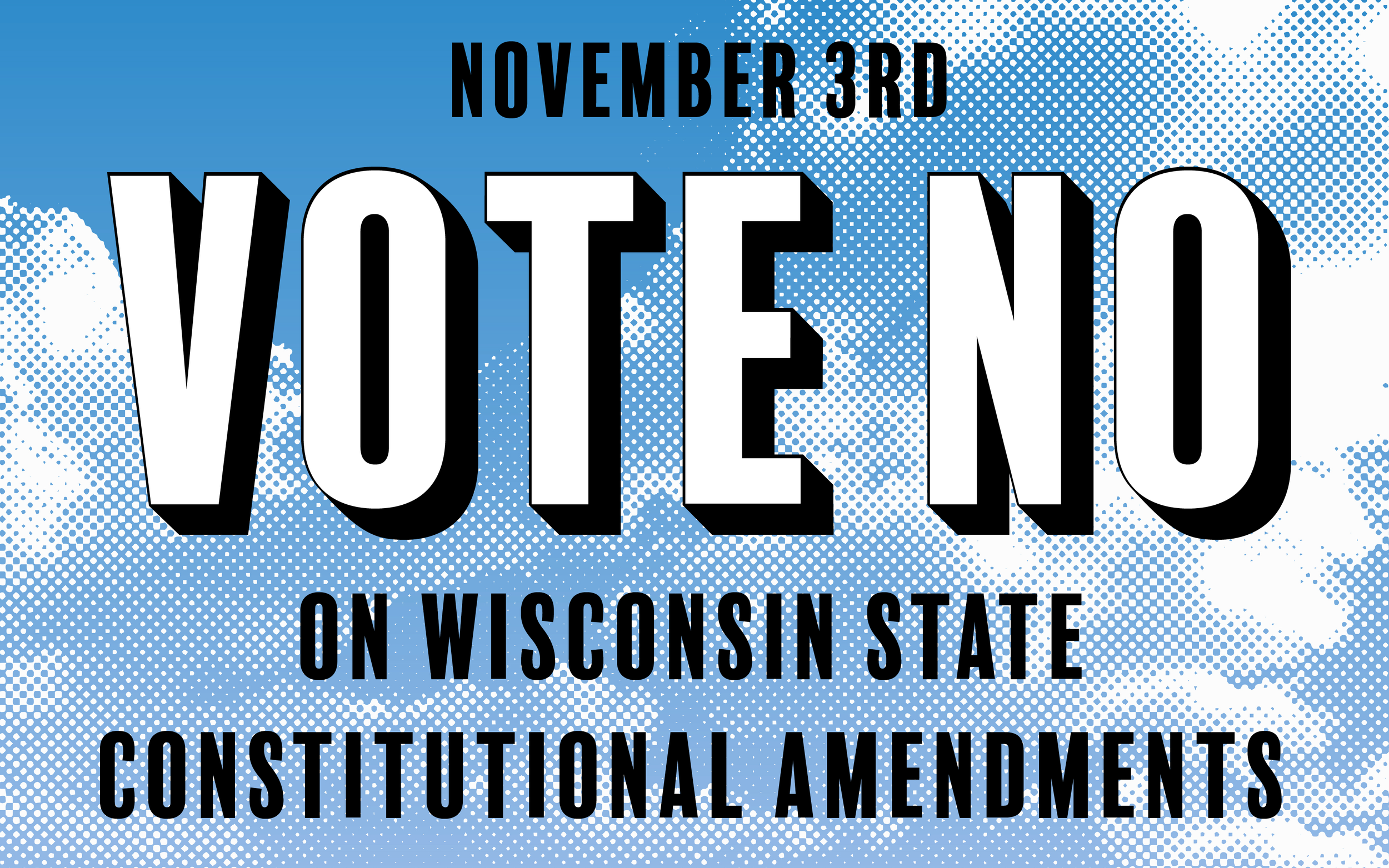
On November 3rd, Wisconsin voters will be asked to weigh in on three constitutional amendments. Each one should be rejected because they were advanced by Republican legislators seeking to impose their biases in our state Constitution.
When the Legislature passes a proposal in two consecutive legislative sessions, it places a question before voters. If the full text of the proposal is not included, its wording must be concise and permit the voter to answer with a “yes” or “no.” The simplicity of this format obscures the complexity and potential consequences of a constitutional amendment. If voters pass the proposal, it then becomes an amendment to Wisconsin’s Constitution.
To be specific, we should vote “no” on the “Prohibit the Closure of Places of Worship During Emergencies Amendment” as it limits the state government’s ability to manage public safety. The government must be empowered to protect the community from threats, be it a public health crisis, political unrest, severe weather, or otherwise.
We should also vote “no” on the “Prohibit Government Discrimination or Preferential Treatment Amendment.” Its negative effects would extend to programs intended to address documented inequities such as those in public education and government contracting. This amendment comes amid a broader conservative effort to restrict affirmative action and Diversity, Equity, and Inclusion (DEI) initiatives.
Finally, we should vote “no” on “Prohibit Partial Veto to Increase Tax or Fee Amendment” because the partial veto provides the governor the ability to “check” the legislature’s power to appropriate funds.
These amendments would significantly change Wisconsin’s Constitution and, if passed, would impact the state’s ability to respond to emergencies, address disparities, and manage public finances. Progressives will want to vote “no.”